The Rise and Fall of Subprime Mortgages
Contents
The Rise and Fall of Subprime Mortgages
Overview
In the early 2000s, subprime mortgage loans became increasingly popular among local brokers targeting families or neighborhoods with poor credit histories. These loans were characterized by adjustable rates, interest-only payments, and teaser periods that made them seem lucrative to lenders but risky for borrowers. This essay will explore the development of subprime mortgages, their underlying mechanisms, and their consequences.
Context
In the late 1990s and early 2000s, the US housing market experienced a surge in demand, driven by low interest rates and lax lending standards. The subprime mortgage market emerged as a response to this demand, targeting borrowers who couldn’t qualify for traditional mortgages due to their poor credit history or income instability. However, this market was built on shaky ground, with lenders relying on complex financial instruments and exotic mortgage products.
Timeline
- 1990s: US housing market experiences a surge in demand, driven by low interest rates and lax lending standards.
- Early 2000s: Subprime mortgage market emerges as a response to this demand, targeting borrowers with poor credit histories or income instability.
- 2004: Adjustable-rate mortgages (ARMs) become increasingly popular, allowing lenders to adjust the interest rate according to changes in short-term lending rates.
- 2005-2006: Interest-only mortgages and teaser periods become more widespread, making subprime loans seem lucrative to borrowers but increasing risks for lenders.
- 2007: Subprime crisis strikes, causing a global financial meltdown as housing prices plummet and defaults on subprime loans skyrocket.
Key Terms and Concepts
- Subprime mortgage: A loan given to borrowers with poor credit histories or income instability, often characterized by adjustable rates, interest-only payments, and teaser periods.
- Adjustable-rate mortgage (ARM): A type of mortgage where the interest rate can vary according to changes in short-term lending rates.
- Interest-only mortgage: A type of mortgage where only interest payments are made for a set period, without amortization of the principal.
- Teaser period: An introductory period during which the initial interest payments are kept artificially low, back-loading the cost of the loan.
- London Interbank Offered Rate (Libor): The benchmark short-term rate at which banks lend each other money.
Key Figures and Groups
- Local brokers: Individuals or companies that target families or neighborhoods with poor credit histories to sell subprime mortgage loans.
- Lenders: Banks, investment firms, or other financial institutions that originate and securitize subprime mortgages.
- Regulators: Government agencies responsible for overseeing the lending industry and enforcing regulations.
Mechanisms and Processes
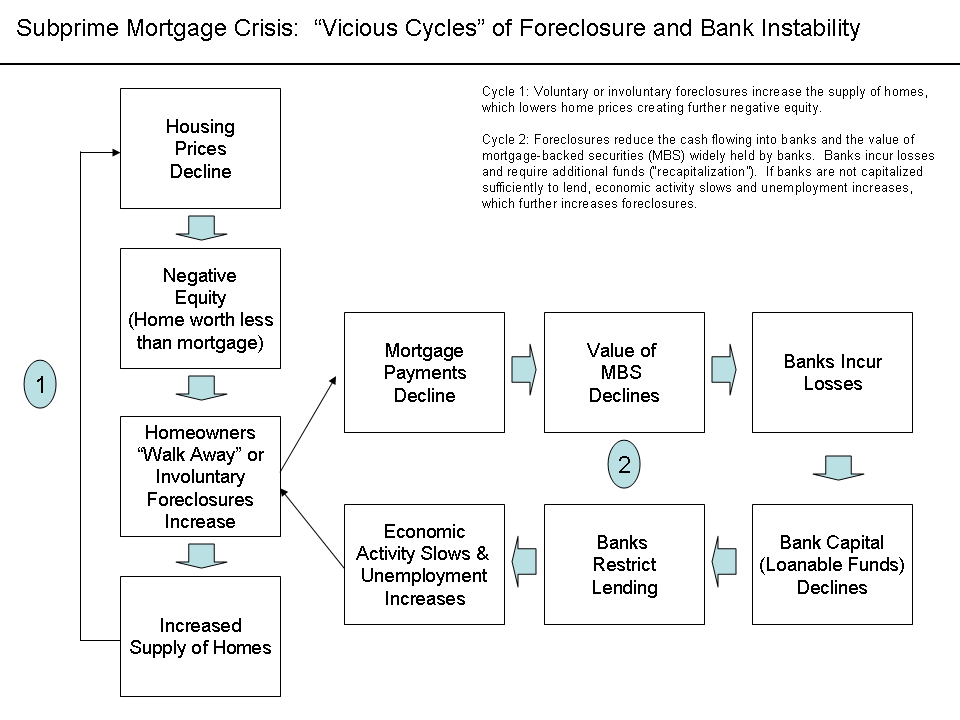
→ Lenders offer subprime mortgage loans with attractive introductory rates to borrowers who can’t qualify for traditional mortgages. → Borrowers are attracted by the low initial payments, but unaware of the risks associated with adjustable rates, interest-only payments, and teaser periods. → As short-term lending rates rise, lenders adjust the interest rate on ARMs, increasing the cost of borrowing for subprime borrowers. → Defaults on subprime loans skyrocket as housing prices plummet, causing a global financial meltdown.
Deep Background
The subprime mortgage market was built on complex financial instruments and exotic mortgage products that allowed lenders to package and sell these risks to investors worldwide. The widespread use of ARMs, interest-only mortgages, and teaser periods enabled lenders to generate short-term profits but created long-term risks for both borrowers and lenders.
Explanation and Importance
The subprime crisis highlighted the dangers of unregulated lending practices and the risks associated with complex financial instruments. It led to a global financial meltdown, causing widespread job losses, home foreclosures, and economic instability.
Comparative Insight
Similar trends have emerged in other regions, such as Europe’s sovereign debt crisis, where excessive borrowing by governments has raised concerns about sovereign default risk.
Extended Analysis
- Rise of the Subprime Market: How did the subprime mortgage market emerge as a response to the demand for housing?
- Key factors: low interest rates, lax lending standards, and the rise of ARMs
- The Role of Teaser Periods: What was the impact of teaser periods on borrowers and lenders?
- Consequences: increased risk for lenders, lack of transparency for borrowers
- Securitization and Risk Transfer: How did lenders package and sell subprime risks to investors worldwide?
- Key players: investment banks, rating agencies, regulators
Open Thinking Questions
- What are the underlying causes of the subprime crisis, and how can we prevent similar crises in the future?
- What role did regulatory failures play in the emergence of the subprime market?
- How can we balance the need for affordable housing with the risks associated with unregulated lending practices?
Conclusion
The rise and fall of subprime mortgages represents a pivotal moment in modern economic history, highlighting the dangers of unregulated lending practices and complex financial instruments. This essay has explored the development of subprime mortgages, their underlying mechanisms, and their consequences, providing a nuanced understanding of this critical period in global finance.
Frequently asked questions
What is Rise and Fall of Subprime Mortgages about?
In the early 2000s, subprime mortgage loans became increasingly popular among local brokers targeting families or neighborhoods with poor credit histories. These loans were characterized by adjustable rates, interest-only payments, and teaser periods that made them seem lucrative to lenders but risky for borrowers. This essay will explore the development of subprime mortgages, their underlying mechanisms, and their consequences.
What key events are covered?
1990s: US housing market experiences a surge in demand, driven by low interest rates and lax lending standards; Early 2000s: Subprime mortgage market emerges as a response to this demand, targeting borrowers with poor credit histories or income instability; 2004: Adjustable-rate mortgages (ARMs) become increasingly popular, allowing lenders to adjust the interest rate according to changes in short-term lending rates
Why is The Rise and Fall of Subprime Mortgages important?
The subprime crisis highlighted the dangers of unregulated lending practices and the risks associated with complex financial instruments. It led to a global financial meltdown, causing widespread job losses, home foreclosures, and economic instability.