The Return of the Emperor: Napoleon's Re-emergence and its Global Consequences
Contents

The Return of the Emperor: Napoleon’s Re-emergence and its Global Consequences
Overview
In April 1814, Napoleon Bonaparte abdicated his throne and was exiled to the island of Elba. However, on March 1, 1815, he escaped from Elba and returned to France, determined to revive his Empire. This event marked a significant turning point in European history, as it led to a renewed conflict between Napoleon’s forces and those of the coalition that had defeated him earlier. The return of the Emperor also had far-reaching consequences for global trade and finance.
Context
The Congress of Vienna was underway when Napoleon escaped from Elba. This gathering aimed to reestablish the old European order, which had been disrupted by the Napoleonic Wars. However, Napoleon’s return threw a wrench into these plans, leading to a renewed conflict that would last until his final defeat at Waterloo in June 1815.
The Continental System
During this period, Europe was still recovering from the devastating effects of the Napoleonic Wars. The Continental System, introduced by Napoleon in 1806, had been designed to weaken Britain’s economy by restricting trade with its European colonies. Although it had failed to achieve its intended goal, the system had contributed to widespread economic hardship and instability across Europe.
Timeline
- April 1814: Napoleon abdicates his throne and is exiled to Elba.
- March 1, 1815: Napoleon escapes from Elba and returns to France.
- March 1815: The Congress of Vienna continues, with the coalition powers struggling to respond to Napoleon’s return.
- May-June 1815: The Waterloo Campaign takes place, resulting in Napoleon’s final defeat.
- June 1815: Napoleon is exiled again, this time to the island of Saint Helena.
Key Terms and Concepts
Napoleonic Wars: A series of conflicts that took place from 1803 to 1815, during which Napoleon Bonaparte dominated Europe. The wars had far-reaching consequences for European politics, economy, and society.
Continental System: An economic policy introduced by Napoleon in 1806, aimed at weakening Britain’s economy by restricting trade with its European colonies.
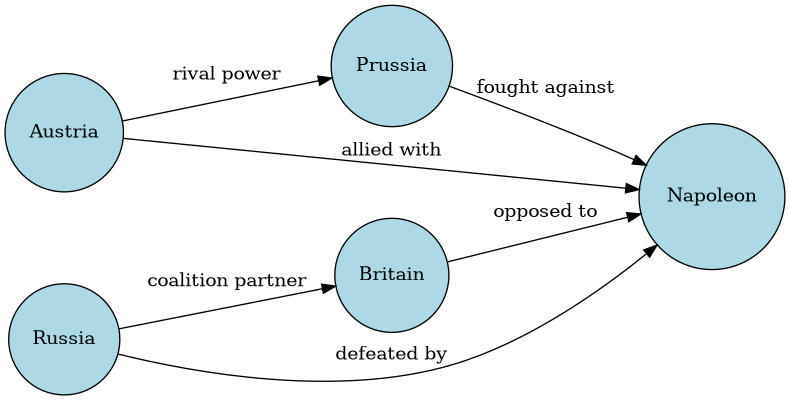
Coalition Powers: A loose alliance of European states that opposed Napoleon’s expansionist policies. The coalition included Austria, Prussia, Russia, and Britain, among others.
Grande Armée: Napoleon’s elite military force, composed of the best soldiers from across Europe.
Key Figures and Groups
Napoleon Bonaparte
As the Emperor of France, Napoleon was a dominant figure in European politics during this period. His return to power marked a significant turning point in history, as it led to renewed conflict between his forces and those of the coalition powers.
Nathan Rothschild
A wealthy banker from Frankfurt, Nathan Rothschild played a crucial role in financing Britain’s military campaigns against Napoleon. He and his brothers provided gold coins worth over £2 million to the British government, which was used to fund subsidies to continental allies.
Mechanisms and Processes
The following sequence of events illustrates how Napoleon’s return led to a renewed conflict:
- Napoleon’s Escape: On March 1, 1815, Napoleon escaped from Elba and returned to France.
- Coalition Response: The coalition powers responded by mobilizing their forces for another war against Napoleon.
- Financial Support: Nathan Rothschild provided gold coins worth over £2 million to the British government, which was used to fund subsidies to continental allies.
- Military Campaigns: The renewed conflict led to a series of military campaigns, including the Waterloo Campaign.
Deep Background
The Napoleonic Wars had far-reaching consequences for European politics and economy. The wars marked a significant turning point in the development of modern nation-states, as they led to the reorganization of Europe along national lines.
The Rise of Nationalism
During this period, nationalism began to emerge as a powerful force across Europe. The Napoleonic Wars had created a sense of shared identity and purpose among Europeans, which would eventually lead to the unification of Germany and Italy in the 19th century.
Explanation and Importance
Napoleon’s return marked a significant turning point in European history, leading to renewed conflict between his forces and those of the coalition powers. The event also had far-reaching consequences for global trade and finance, as it led to a significant increase in gold purchases by Nathan Rothschild.
The Significance of the Waterloo Campaign
The Waterloo Campaign, which took place from May-June 1815, marked the final defeat of Napoleon’s forces. This campaign resulted in the end of the Napoleonic Wars and had far-reaching consequences for European politics and economy.
Comparative Insight
Comparing the development of the Continental System with the British Empire’s economic policies during this period reveals interesting parallels. Both systems aimed to weaken their opponents by restricting trade, but they differed significantly in terms of their implementation and outcomes.
The Legacy of the Napoleonic Wars
The Napoleonic Wars had a profound impact on European politics and economy, leading to the reorganization of Europe along national lines. The wars also marked the emergence of nationalism as a powerful force across the continent.
Extended Analysis
The Role of Banking in Financing Conflict
Nathan Rothschild’s role in financing Britain’s military campaigns against Napoleon highlights the importance of banking in financing conflict. The Rothschilds provided gold coins worth over £2 million to the British government, which was used to fund subsidies to continental allies.
The Economic Consequences of War
The Napoleonic Wars had far-reaching consequences for European economy, leading to widespread economic hardship and instability across the continent.
Open Thinking Questions
• What were the underlying causes of Napoleon’s return to power? • How did Nathan Rothschild’s financial support contribute to the outcome of the conflict? • What are the long-term consequences of the Napoleonic Wars for European politics and economy?
Conclusion
Napoleon’s return marked a significant turning point in European history, leading to renewed conflict between his forces and those of the coalition powers. The event also had far-reaching consequences for global trade and finance, as it led to a significant increase in gold purchases by Nathan Rothschild.