The Mural Controversies: Rivera's Art and American Politics

The Mural Controversies: Rivera’s Art and American Politics
The controversy surrounding Diego Rivera’s murals in Detroit and New York City highlights the complex relationship between art, politics, and social change in the 1930s United States. Surrealism, a artistic movement that emphasized the subconscious and challenged traditional norms, played a significant role in shaping Rivera’s work. The debates over his murals reveal the tensions between creative expression and ideological constraints.
Context
The early 20th century saw a surge in Art Deco and Social Realism, styles that reflected the changing social and economic landscape of America. However, the rise of fascist and communist ideologies globally led to increased censorship and scrutiny of art. The New Deal programs initiated by President Franklin D. Roosevelt aimed to revitalize the economy and provide relief to those affected by the Great Depression. This period also saw a growing awareness of social inequality and the need for reform.
Timeline
• 1932: Diego Rivera is commissioned to create murals in Detroit’s City Hall as part of the Federal Art Project, a New Deal program that employed artists. • March 1933: The first mural, “The History of Labor,” is unveiled, but it sparks controversy due to its depiction of a worker being killed by a capitalist. • April 1933: Rivera creates another mural in Detroit, “The Industrial Worker,” which includes images of Lenin and Marxist slogans. • December 1933: The murals are removed from the city hall, and Rivera is forced to leave the country for Mexico. • 1935: Rockefeller commissions Rivera to create a new set of murals at New York’s Rockefeller Center. • May 1936: The mural is unveiled, but it includes a portrait of Lenin and communist slogans. • July 1936: John D. Rockefeller Jr. orders the destruction of the mural.
Key Terms and Concepts
- Surrealism: an artistic movement that emphasized the subconscious and challenged traditional norms.
- Art Deco: a style characterized by ornate decoration, geometric patterns, and modern materials.
- Social Realism: a style that depicted everyday life, social issues, and the struggles of the working class.
- New Deal: a series of programs initiated by President Franklin D. Roosevelt to revitalize the economy and provide relief to those affected by the Great Depression.
- Federal Art Project: a New Deal program that employed artists to create murals, sculptures, and other artworks in public spaces.
Key Figures and Groups
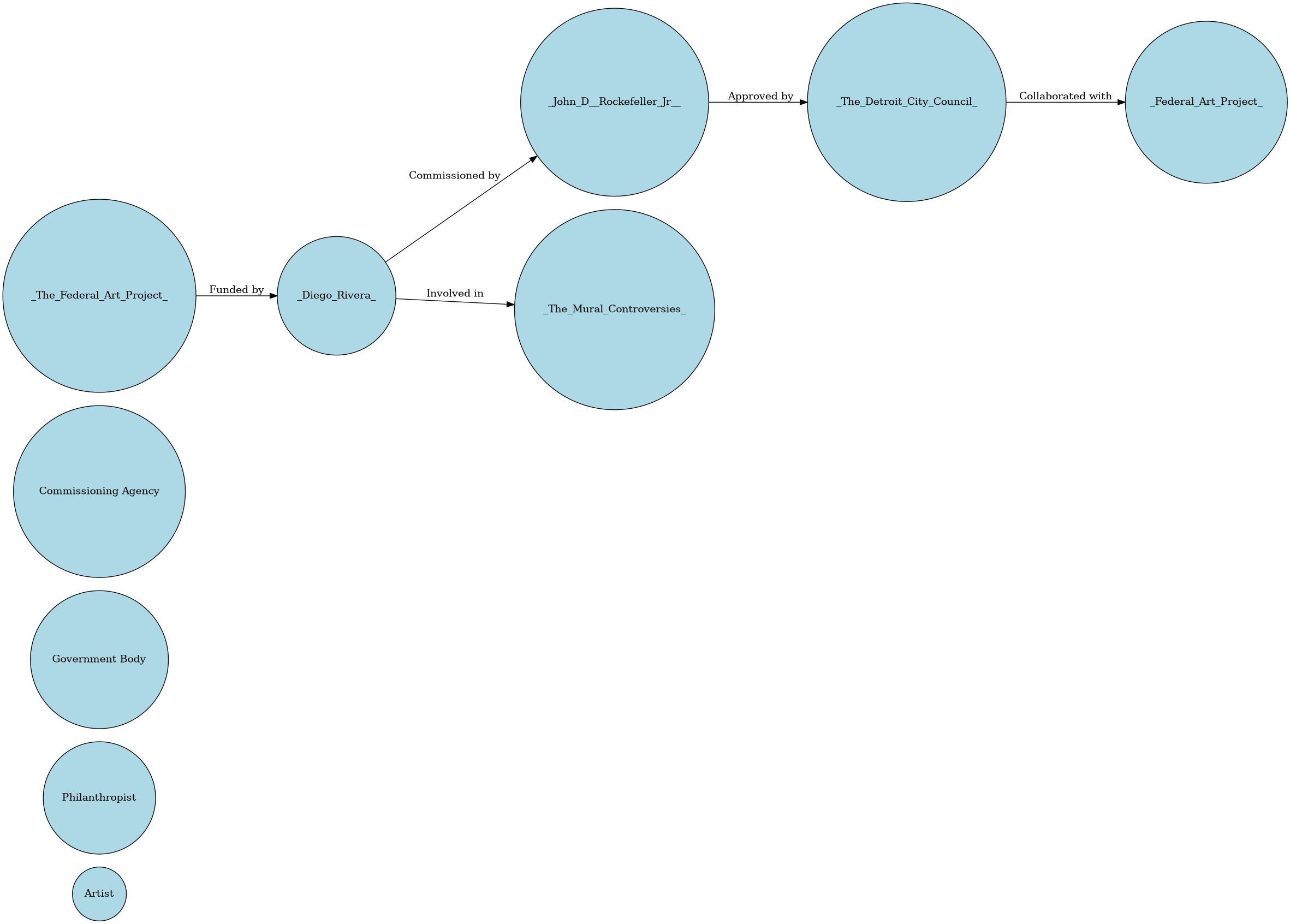
- Diego Rivera: Mexican artist known for his large-scale murals that depicted social and political themes.
- John D. Rockefeller Jr.: American businessman and philanthropist who commissioned Rivera’s mural at Rockefeller Center.
- The Detroit City Council: a group of politicians responsible for overseeing the city’s arts programs and approving the murals.
Mechanisms and Processes
The controversy over Rivera’s murals reveals the complex relationships between art, politics, and social change. The following sequence of events highlights the tensions:
→ Rivera creates murals in Detroit that depict Marxist themes and images of Lenin. → The murals spark controversy among city officials and business leaders. → Rivera is forced to leave the country for Mexico due to the backlash. → Rockefeller commissions Rivera to create a new set of murals at Rockefeller Center, but with conditions that prohibit communist imagery. → Rivera includes a portrait of Lenin in the mural, leading to its destruction.
Deep Background
The Great Depression and the rise of fascist and communist ideologies globally created an environment where art was increasingly politicized. The Federal Art Project, part of the New Deal, aimed to promote arts education and provide employment for artists. However, this also led to increased censorship and scrutiny of art. The controversy over Rivera’s murals reflects the broader tensions between artistic expression and ideological constraints.
Explanation and Importance
The controversy over Rivera’s murals highlights the complex relationships between art, politics, and social change. The debate reveals the tensions between creative expression and ideological constraints, as well as the role of patronage in shaping artistic content. The destruction of the mural at Rockefeller Center marked a turning point in the relationship between artists and their patrons.
Comparative Insight
The controversy over Rivera’s murals can be compared to the Sacco-Vanzetti case, where two Italian anarchists were executed for murder, sparking widespread protests and debates about free speech and censorship. This comparison highlights the broader tensions between artistic expression and ideological constraints during this period.
Extended Analysis
- Artistic Freedom vs. Censorship: The controversy over Rivera’s murals raises questions about the balance between artistic freedom and censorship.
- Patronage and Artistic Content: The role of patronage in shaping artistic content is highlighted by the destruction of the mural at Rockefeller Center.
- The Politics of Art: The debate over Rivera’s murals reflects the broader tensions between art, politics, and social change during this period.
Open Thinking Questions
• How do you think artists should balance their creative expression with the expectations of their patrons? • What are the implications of patronage on artistic content, and how can we ensure that artists maintain their autonomy? • In what ways did the controversy over Rivera’s murals reflect the broader social and political tensions of this period?
More posts
- The Ascendancy of the Rentier Class in Europe (1830-1914)
- The Challenge of Uncertainty: Understanding the Role of the State and Individual Response
- The Venetian Lender: Debt, Law, and Ethnicity in Early Modern Europe
- Secure Property Rights in Developing Countries
- The Rise of the United East India Company