The Great Depression: A Crisis of Finance and Psychology

The Great Depression: A Crisis of Finance and Psychology
Overview In the early 20th century, the United States was ravaged by economic depression. The Great Depression, which lasted from 1929 to the late 1930s, had far-reaching consequences for individuals, communities, and nations worldwide. This period saw widespread unemployment, poverty, and despair, leading to a profound psychological impact on those affected. As prominent figures of the time acknowledged, the crisis was not solely economic in nature but also involved a complex interplay between financial misconduct, psychological factors, and societal conditions.
Context The Roaring Twenties, a period of unprecedented economic growth and cultural change, came to an abrupt end with the stock market crash of 1929. The subsequent Great Depression was characterized by massive unemployment, business failures, and widespread poverty. This economic downturn occurred against the backdrop of significant social and political changes, including the rise of fascist regimes in Europe and the increasing polarization of American society.
Timeline • 1920s: The United States experiences rapid industrialization and economic growth. • 1929: The stock market crashes on Black Tuesday (October 29). • 1930-1932: Unemployment rises to over 25%, with millions affected by poverty and homelessness. • 1933: President Franklin D. Roosevelt introduces the New Deal, a series of programs aimed at alleviating suffering and reforming the economy. • 1936: John Maynard Keynes publishes his seminal work, the General Theory of Employment, Interest and Money. • Late 1930s: The global economy begins to recover, but the effects of the Great Depression persist for decades.
Key Terms and Concepts
- Great Depression: A period of severe economic downturn characterized by widespread unemployment, poverty, and business failures.
- New Deal: A series of programs introduced by President Roosevelt aimed at alleviating suffering and reforming the economy.
- General Theory: John Maynard Keynes’ influential work on macroeconomic theory and policy.
- Fascism: A far-right ideology that emphasizes authoritarianism, nationalism, and suppression of individual rights.
Key Figures and Groups
- Franklin D. Roosevelt: The 32nd President of the United States, who introduced the New Deal and played a crucial role in shaping American economic policy during the Great Depression.
- John Maynard Keynes: A British economist who developed the General Theory and argued for government intervention in the economy to stimulate growth and employment.
- The Stock Market: The hub of financial activity that crashed in 1929, triggering the Great Depression.
- The Unemployed: Millions of Americans who lost their jobs and struggled to make ends meet during this period.
Mechanisms and Processes
A combination of factors contributed to the Great Depression:
- Overproduction and underconsumption led to a surplus of goods and a lack of demand.
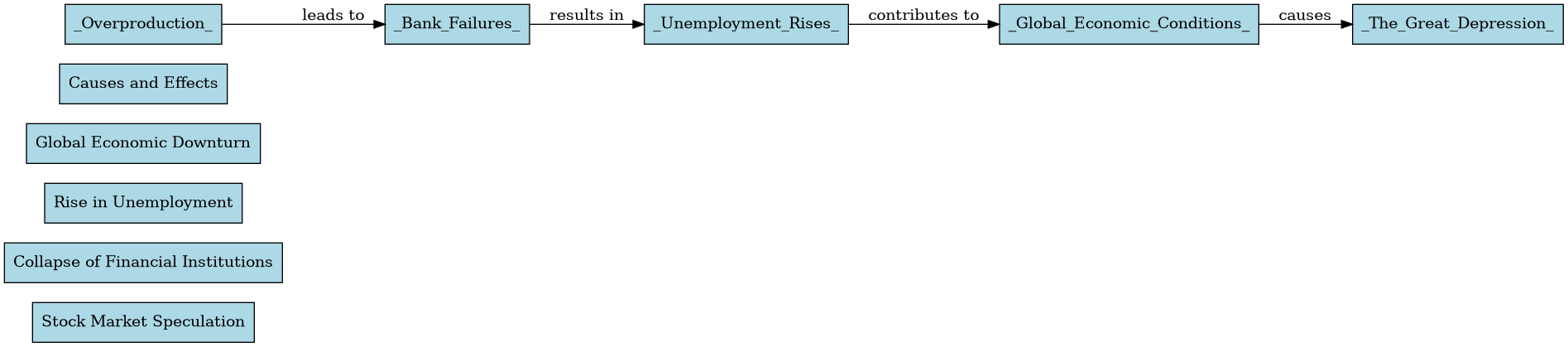
- The stock market crash of 1929 triggered a wave of bank failures, leading to widespread unemployment.
- Government policies, such as protectionism and tax cuts for the wealthy, exacerbated the economic downturn.
-> Overproduction and underconsumption → Stock market crash → Bank failures → Unemployment
Deep Background The Great Depression was not an isolated event but rather the culmination of long-term trends and conditions:
- The Industrial Revolution, which had transformed the American economy in the late 19th century, created new opportunities for growth but also concentrated wealth and power.
- The rise of globalization led to increased trade and economic interdependence, making the global economy more vulnerable to shocks.
Explanation and Importance The Great Depression was a complex event that cannot be attributed solely to financial misconduct or psychological factors. Rather, it resulted from a combination of economic, social, and political conditions that created a perfect storm of suffering and despair. The crisis had far-reaching consequences, including:
- Widespread poverty and homelessness
- Massive unemployment and business failures
- A profound impact on American society and politics
Comparative Insight The Great Depression shares similarities with other periods of economic crisis, such as the Great Recession (2007-2009) in the United States. Both events were characterized by:
- Overproduction and underconsumption
- Financial instability and bank failures
- Government responses aimed at alleviating suffering and reforming the economy
However, there are also significant differences between the two periods, reflecting changing economic conditions and policy responses.
Extended Analysis
The Role of Psychological Factors: The Great Depression was characterized by widespread anxiety, fear, and despair. How did these psychological factors contribute to the crisis?
- Fear and Anxiety: As people lost their jobs and struggled to make ends meet, they became increasingly anxious about their financial security.
- Despair and Hopelessness: The prolonged nature of the economic downturn created a sense of hopelessness among those affected.
The New Deal and Keynesian Economics: How did the New Deal and Keynesian economics shape American policy responses during this period?
- New Deal Programs: The New Deal introduced a range of programs aimed at alleviating suffering, including job creation initiatives, social welfare programs, and infrastructure projects.
- Keynesian Economics: Keynes’ General Theory provided a new framework for understanding economic crises and the role of government intervention in stimulating growth.
The Global Context: How did the Great Depression affect other countries and regions?
- Global Trade: The global economy was heavily interconnected, making it difficult for countries to isolate themselves from the crisis.
- Fascist Regimes: The rise of fascist regimes in Europe was influenced by economic conditions and policies during this period.
Open Thinking Questions
• How did the Great Depression shape American society and politics? • What are the similarities and differences between the Great Depression and other periods of economic crisis? • How can we apply lessons from the Great Depression to contemporary economic policy debates?