The Global Bond Market: A History and Explanation

The Global Bond Market: A History and Explanation
Overview The bond market has evolved over eight centuries from its humble beginnings in northern Italy to become a vast financial entity. With a total value of $18 trillion in international bonds and an additional $50 trillion in domestic bonds, the market plays a crucial role in determining long-term interest rates for economies worldwide. This essay will delve into the history of the bond market, explain how it functions, and discuss its impact on individuals and economies.
Context In the 12th century, Italian city-states such as Genoa and Venice began issuing bonds to finance their military campaigns and trade expeditions. These early bonds were known as “juros” or “rentes,” and they provided a fixed rate of return for investors. As trade and commerce expanded throughout Europe, the use of bonds spread, and by the 17th century, governments and corporations were issuing bonds to raise capital.
Timeline
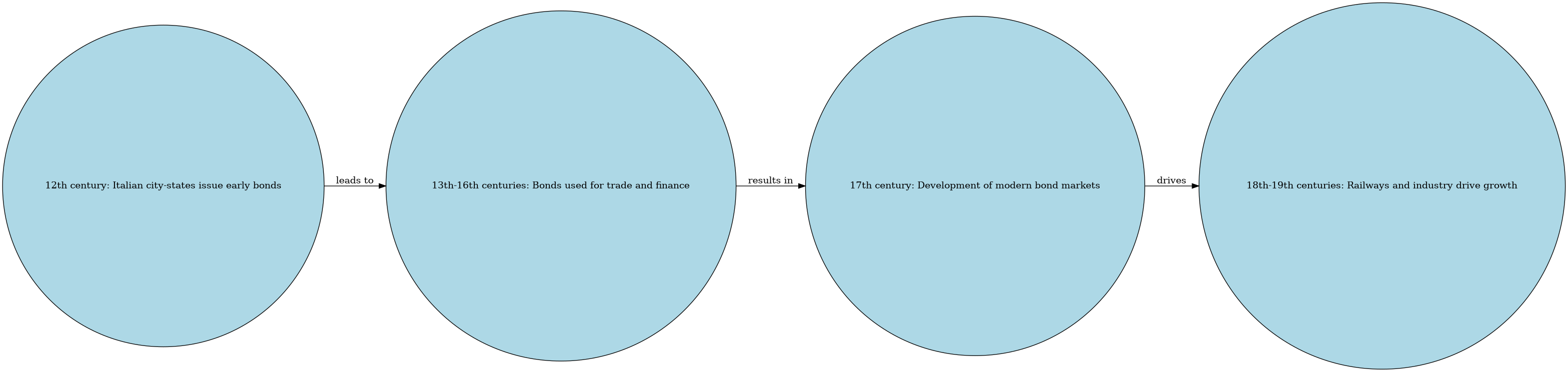
- 12th century: Italian city-states issue early bonds (juros or rentes) to finance military campaigns and trade expeditions.
- 13th-16th centuries: Trade and commerce expand throughout Europe, leading to the widespread use of bonds.
- 17th century: Governments and corporations begin issuing bonds to raise capital.
- 18th-19th centuries: The bond market expands globally, with European powers establishing colonial empires and issuing bonds to finance their endeavors.
- 20th century: The bond market becomes increasingly complex, with the introduction of new financial instruments such as mortgage-backed securities (MBS) and collateralized debt obligations (CDOs).
- Late 20th-21st centuries: Globalization and technological advancements lead to an explosion in the size and complexity of the bond market.
Key Terms and Concepts
- Bond: A security issued by a borrower (government, corporation, or individual) to raise capital from investors.
- Coupon: The fixed rate of return paid to bondholders on a regular basis (e.g., semi-annually or annually).
- Market interest rate: The current yield on a bond, calculated by dividing the coupon by the market price.
- Yield curve: A graphical representation of the relationship between market interest rates and maturity dates for bonds.
- Credit rating agency: An organization that assesses the creditworthiness of borrowers (governments, corporations, or individuals) and assigns a credit rating accordingly.
Key Figures and Groups
- Bill Gross: Founder of Pacific Investment Management Company (PIMCO), one of the world’s largest bond funds.
- Federal Reserve: The central bank of the United States, responsible for setting monetary policy and regulating the banking system.
- International Monetary Fund (IMF): An international organization that promotes global financial stability and provides emergency loans to countries in need.
Mechanisms and Processes
The bond market functions as follows:
- A borrower issues a bond to raise capital from investors.
- The bond is sold to investors, who provide the necessary funds to the borrower.
- The borrower uses the raised capital for various purposes (e.g., financing investments, refinancing debt).
- The bondholder receives regular coupon payments and eventually recovers their principal investment at maturity.
Deep Background
The bond market has its roots in medieval Europe, where city-states issued bonds to finance military campaigns and trade expeditions. Over time, the use of bonds spread throughout Europe and beyond, with governments and corporations issuing bonds to raise capital for various purposes. The 20th century saw significant growth and complexity in the bond market, with the introduction of new financial instruments such as MBS and CDOs.
Explanation and Importance
The bond market plays a crucial role in determining long-term interest rates for economies worldwide. When investors become nervous about a borrower’s creditworthiness or currency health, they sell off their holdings, causing bond prices to drop. This leads to increased yields (market interest rates) and higher borrowing costs for governments, corporations, and individuals. The impact of the bond market on individuals is significant, as changes in long-term interest rates affect the value of savings and investments.
Comparative Insight
The growth and complexity of the bond market can be compared to other periods or regions. For example:
- Medieval Europe: Similar to the early days of the bond market, medieval Europe saw the emergence of trade and commerce, leading to increased use of bonds.
- Globalization: The current era of globalization has led to an explosion in the size and complexity of the bond market.
Extended Analysis
This essay will break down the topic into three sub-themes:
- The History of the Bond Market: A detailed examination of the development of the bond market from its medieval origins to the present day.
- How the Bond Market Functions: An explanation of the mechanics of the bond market, including the roles of borrowers, investors, and credit rating agencies.
- The Impact of the Bond Market on Individuals and Economies: A discussion of the significant effects of changes in long-term interest rates on savings, investments, and borrowing costs.
Open Thinking Questions
- How does the bond market’s influence on long-term interest rates affect individuals’ financial decisions?
- What are the implications of a rapidly growing and complex bond market for global economic stability?
- In what ways can investors mitigate risks associated with changes in the bond market?
More posts
- The Russian Financial Crisis and the Collapse of Long-Term Capital Management
- The Financial Struggle of the Confederacy: A Study on the Crucial Role of Money in the American Civil War
- The Evolution of Actuarial Science in Insurance
- The Price Revolution: Economic Decline and Imperial Overstretch
- The Hurricane Katrina Disaster: A Critical Examination