The Economic Role of Jewish Moneylenders in Shakespeare's Venice
Contents
The Economic Role of Jewish Moneylenders in Shakespeare’s Venice
Overview
In William Shakespeare’s play The Merchant of Venice, the character of Shylock is portrayed as a moneylender who demands a pound of flesh as collateral for a loan to Antonio, a merchant. This portrayal has been subject to various interpretations, but one key aspect is the economic role that Jewish moneylenders played in 16th-century Venice. Moneylending and usury, the practice of lending at interest, were contentious issues during this period.

Context
By Shakespeare’s time, Venice was a major commercial center, with trade relationships extending throughout Europe and beyond. The city’s prosperity was built on its strategic location, access to the sea, and its system of mercantile capitalism. However, this economic growth also created social tensions, particularly in relation to issues like usury and moneylending.
Timeline
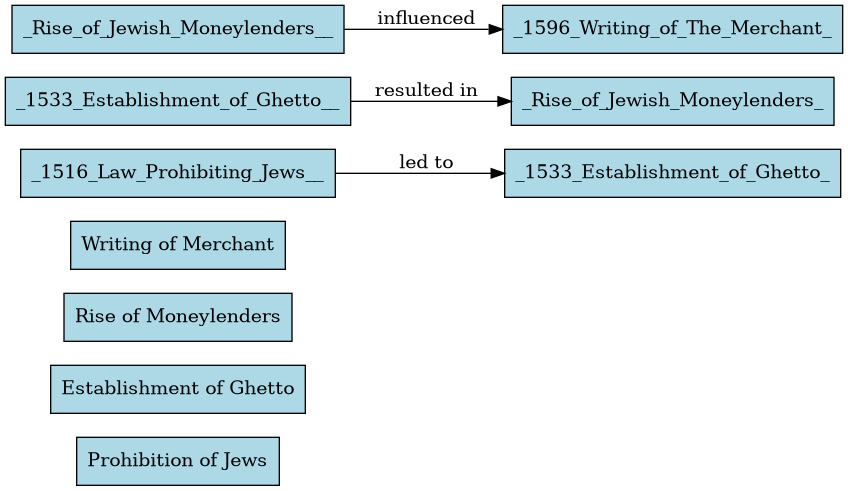
• 1516: The Venetian government passes a law prohibiting Jews from living within the city walls. • 1533: The Council of Ten permits Jews to establish a ghetto on the island of Giudecca, but only for those engaged in commerce or crafts. • 1550s: Jewish moneylenders become increasingly prominent in Venetian commerce, providing credit to merchants and entrepreneurs. • 1596: William Shakespeare’s play The Merchant of Venice is written, featuring Shylock as a major character.
Key Terms and Concepts
Moneylending: The practice of lending money at interest. In the 16th century, this was often associated with usury and controversy.
Usury: The practice of lending at excessive or unreasonable interest rates. This was prohibited in many Christian societies during the Middle Ages.
Mercantile capitalism: An economic system based on trade, commerce, and the accumulation of wealth through investment and entrepreneurship.
Ghetto: A neighborhood or district where Jews were required to live in certain European cities during the Middle Ages and Renaissance.
Key Figures and Groups
Shylock: The protagonist moneylender in Shakespeare’s The Merchant of Venice. Shylock is a member of the Jewish community in Venice and is depicted as a victim of prejudice and anti-Semitism.
Antonio: The merchant who borrows money from Shylock to finance his business ventures. Antonio represents the Christian merchant class in Venice.
The Venetian Government: The ruling authorities in Venice during Shakespeare’s time, responsible for regulating commerce, trade, and social relations.
Mechanisms and Processes
Shylock lends money to Antonio at a high interest rate, which is typical of usury. However, Shylock’s demand for a pound of flesh as collateral represents an extreme form of security. This highlights the tensions between Christian merchants and Jewish moneylenders in Venice, with the latter often viewed as outsiders.
Deep Background
The establishment of the ghetto in 1533 marked a significant shift in Venetian policy towards its Jewish population. Prior to this, Jews were scattered throughout the city, engaging in various forms of commerce and crafts. However, by the mid-16th century, many Christian merchants began to view Jewish moneylenders as competitors and resented their influence.
Explanation and Importance
Shylock’s portrayal as a villainous figure reflects the anti-Semitic attitudes prevalent in Shakespeare’s time. The play highlights the tensions between Christians and Jews over issues like usury, moneylending, and social status. However, it also reveals the complex economic relationships between Jewish moneylenders and Christian merchants in 16th-century Venice.
Comparative Insight
In comparison to other European cities, such as Florence or Antwerp, Venice had a unique relationship with its Jewish population. While Jews played a significant role in commerce and finance throughout Europe, Venetian authorities were more restrictive in their treatment of Jews. This reflects the city’s strong mercantile traditions and its desire to maintain social cohesion.
Extended Analysis
The Representation of Shylock: Shakespeare’s portrayal of Shylock has been subject to various interpretations, with some seeing it as a reflection of anti-Semitic attitudes while others argue that it is a nuanced exploration of Jewish identity. The Problem of Usury: The play highlights the contentious issue of usury and its relationship to moneylending. In reality, Jewish moneylenders in Venice often charged higher interest rates than their Christian counterparts.
Open Thinking Questions
• What are the implications of Shylock’s portrayal for our understanding of anti-Semitism in Shakespeare’s time? • How did the economic relationships between Jewish moneylenders and Christian merchants shape social tensions in 16th-century Venice? • What does the play reveal about the complex issues surrounding usury, moneylending, and commerce during this period?
Conclusion
The portrayal of Shylock in The Merchant of Venice reflects the complexities of social relations and economic relationships between Jewish moneylenders and Christian merchants in 16th-century Venice. This moment represents a critical juncture in the history of anti-Semitism, highlighting the tensions between Christians and Jews over issues like usury, moneylending, and social status.
More posts
- The Rise of Subprimia: A Historical Analysis of the US Housing Market
- The Introduction of Hindu-Arabic Numerals and Its Impact on European Mathematics and Economy
- The Working Conditions in 18th-Century Workhouses
- The Evolution of Credit and Debt: Ancient Mesopotamia's Lending System
- The Evolution of Finance in the United States