The British South Sea Bubble: A Comparative Analysis
Contents
The British South Sea Bubble: A Comparative Analysis
Overview
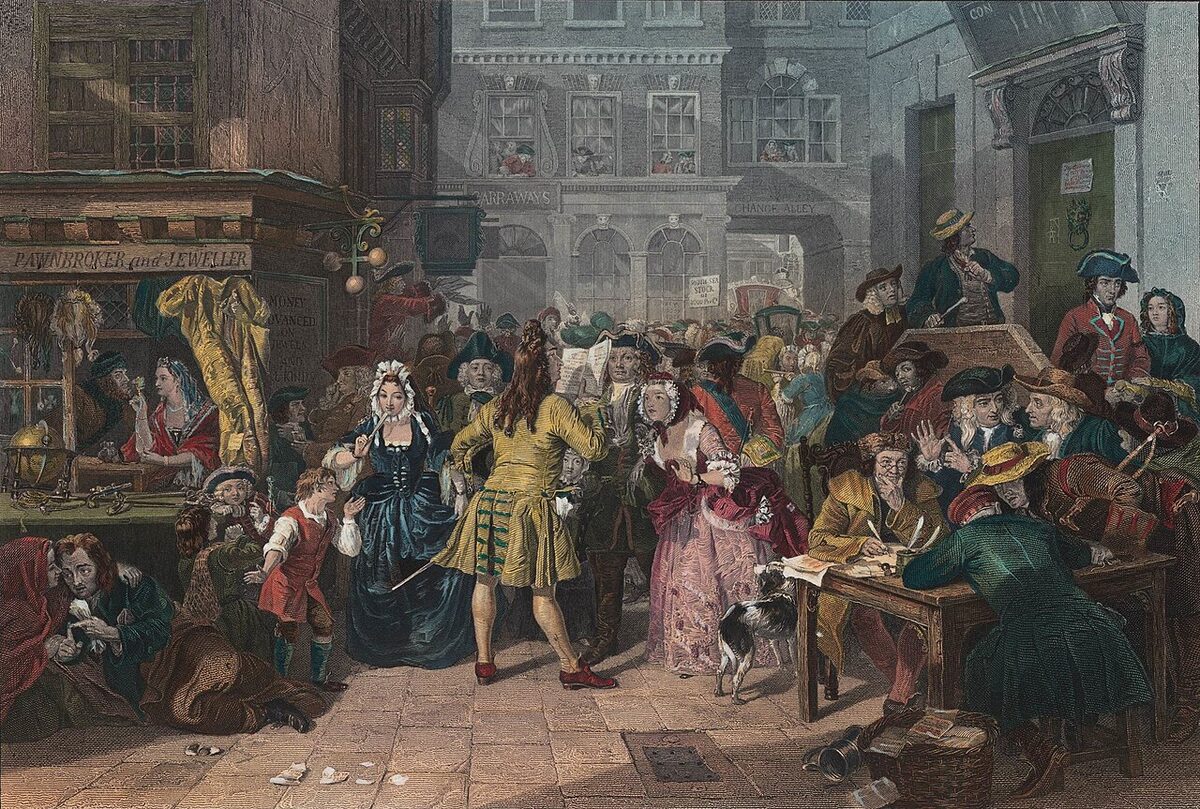
In 1720, a significant financial crisis occurred in Britain, known as the South Sea Bubble. This event bears comparison with the contemporaneous South Sea Bubble in France, led by John Law. While both crises share similarities, they differ significantly in their impact and scale.
Context
The British economy was recovering from the devastation of the War of the Spanish Succession (1701-1714). The government had accumulated substantial debt to finance the war effort. In response, the South Sea Company was formed to convert this debt into company equity and monopolize trade with the Spanish Empire in South America.
Key features of the British economy at this time include:
- Government debt: Accumulated during the War of the Spanish Succession
- Economic recovery: The British economy was recovering from war-induced devastation
- Monopolies and trade: The South Sea Company’s charter granted it a monopoly on trade with the Spanish Empire in South America
Timeline
- 1701-1714: War of the Spanish Succession; Britain accumulates significant debt to finance the war effort.
- 1713: Treaty of Utrecht: Ends the War of the Spanish Succession and grants Britain control of several Spanish colonies in South America.
- 1719: The South Sea Company is formed to convert government debt into company equity and monopolize trade with the Spanish Empire in South America.
- April 1720: First share issue: Shares are offered to the public at £300 per share, rising to £1,000 by June.
- June 1720: Second share issue: Instalment payment is permitted, and loans are offered against shares.
- July 1720: Third share issue: Generous dividends are paid, fuelling further speculation.
Key Terms and Concepts
Government Debt
Government debt refers to the accumulation of financial obligations owed by a government to its creditors. In the case of Britain during the War of the Spanish Succession, government debt was substantial due to the financing of war efforts.
Monopolies and Trade
A monopoly is a market structure in which a single entity controls the production or supply of a commodity or service. The South Sea Company’s charter granted it a monopoly on trade with the Spanish Empire in South America, allowing it to control the flow of goods and services between Britain and its colonies.
Equity Conversion
Equity conversion refers to the process of converting government debt into company equity. This allows governments to restructure their financial obligations and create new assets for themselves or private investors.
Key Figures and Groups
John Blunt
John Blunt was a British financier who played a key role in the formation of the South Sea Company. He was instrumental in convincing Parliament to grant the company a monopoly on trade with the Spanish Empire in South America.
The South Sea Company
The South Sea Company was formed in 1719 to convert government debt into company equity and monopolize trade with the Spanish Empire in South America. The company’s directors stood to profit from the conversion of debt into equity, as they would retain surplus shares to sell to the public.
Mechanisms and Processes
- Equity Conversion: Government debt is converted into company equity.
- Monopoly Grant: Parliament grants the South Sea Company a monopoly on trade with the Spanish Empire in South America.
- Share Issue: Shares are offered to the public, fuelling speculation and euphoria.
Deep Background
The British economy was recovering from the devastation of the War of the Spanish Succession. The government had accumulated substantial debt to finance the war effort, which created an opportunity for companies like the South Sea Company to offer equity conversion solutions to investors.
Explanation and Importance
The British South Sea Bubble occurred in 1720 due to a combination of factors:
- Government debt: The accumulation of financial obligations owed by the government.
- Monopolies and trade: The granting of monopolies on trade with specific regions or commodities.
- Equity conversion: The process of converting government debt into company equity.
The consequences of the South Sea Bubble were significant:
- Financial crisis: The collapse of the bubble led to a financial crisis, affecting investors and creditors.
- Reputation damage: The event damaged the reputation of the South Sea Company and its directors.
Comparative Insight
The British South Sea Bubble can be compared with other financial crises throughout history, such as the Dutch Tulip Mania (1634-1637) or the French Mississippi Bubble (1716-1720).
Extended Analysis
Sub-theme 1: Government Debt and Its Consequences
Government debt was a significant factor contributing to the British South Sea Bubble. The accumulation of financial obligations owed by the government created an opportunity for companies like the South Sea Company to offer equity conversion solutions to investors.
Sub-theme 2: Monopolies and Trade
The granting of monopolies on trade with specific regions or commodities can have far-reaching consequences. In the case of the South Sea Bubble, the monopoly granted to the company allowed it to control the flow of goods and services between Britain and its colonies.
Sub-theme 3: Equity Conversion and Its Implications
Equity conversion is a complex process that involves converting government debt into company equity. This can have significant implications for investors and creditors, as seen in the case of the South Sea Bubble.
Open Thinking Questions
- How did the British South Sea Bubble reflect broader trends in economic history?
- What were the consequences of the bubble on the economy and society?
- Can similar events be prevented or mitigated through regulatory measures?
Conclusion
The British South Sea Bubble was a significant financial crisis that occurred in 1720 due to a combination of factors, including government debt, monopolies, and equity conversion. The event had far-reaching consequences for investors, creditors, and the economy as a whole.
Frequently asked questions
What was the South Sea Bubble?
The South Sea Bubble was a major British financial crisis of 1720. The South Sea Company was formed in 1719 to convert government debt accumulated during the War of the Spanish Succession into company equity and to hold a monopoly on trade with the Spanish Empire in South America. Speculation drove its shares from £300 in April 1720 to £1,000 by June before the bubble collapsed.
What caused the South Sea Bubble?
The bubble was driven by three factors: the substantial government debt Britain had accumulated financing the War of the Spanish Succession, the monopoly Parliament granted the South Sea Company on trade with Spanish South America, and the equity-conversion scheme that let the company and its directors profit by selling surplus shares to the public.
How did the South Sea Bubble compare with other financial crises?
The South Sea Bubble of 1720 is often compared with the contemporaneous French Mississippi Bubble led by John Law, and with the Dutch Tulip Mania (1634-1637). While these crises share common features, they differ significantly in their impact and scale.